I am not an agency and not an outsourced contractor. I built my own network of channels from zero, without a single dollar of ad budget, and I know these platforms from the side of someone who grows on them.
50,000,000+views own network of channels
120,000+followers combined
$0ad spend fully organic
4platforms YouTube, TikTok, Instagram, Facebook
A live example: my own channel, built from zero
Istorium was built on pure storytelling, with no advertising at all. Below is where it stands today. Open it and see for yourself.
Accredited by Higgsfield Academy in AI filmmaking. I run the whole cycle myself: script, visuals, characters, voice, music, edit and publishing. That means there is no vendor sitting between the idea and the finished video.
How I workReal production materials from one episode+
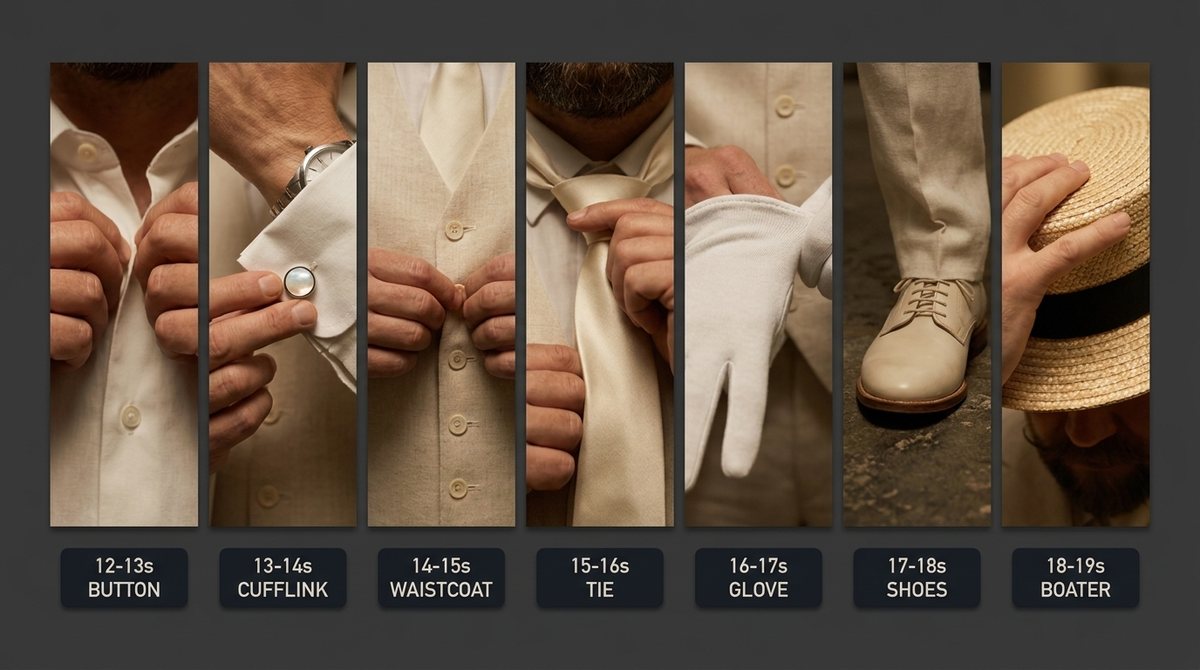
Below are the real working materials from an Istorium episode about the invention of the speedometer. Not presentation slides, but the parts a video is assembled from before a single frame is shot.
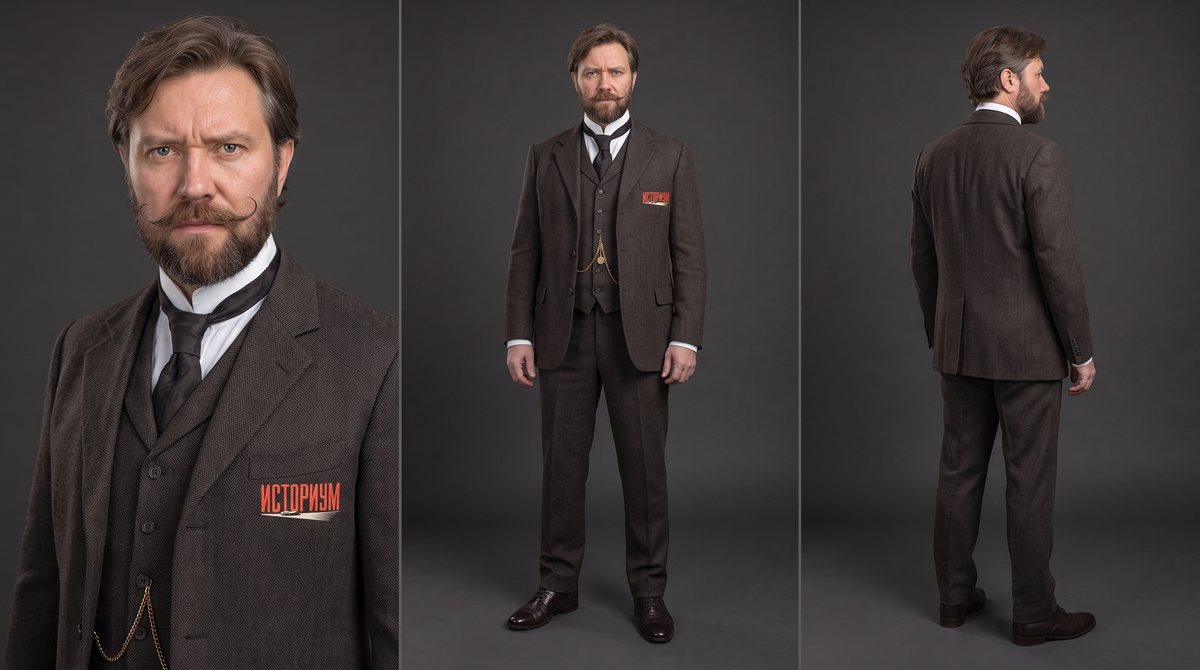
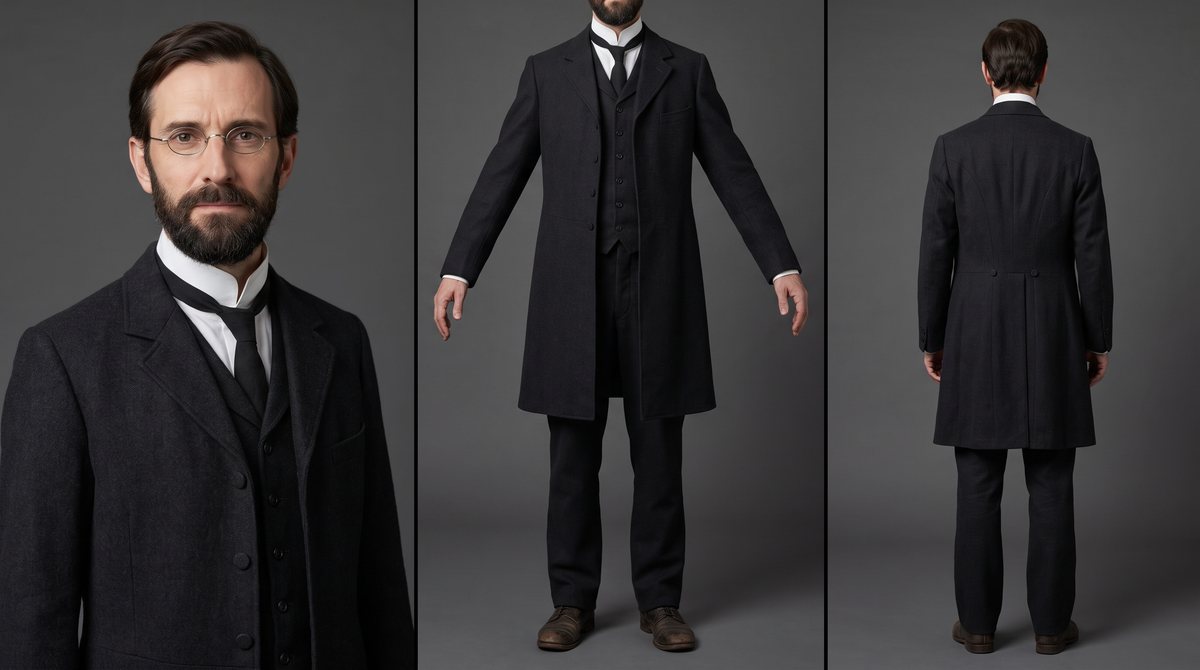
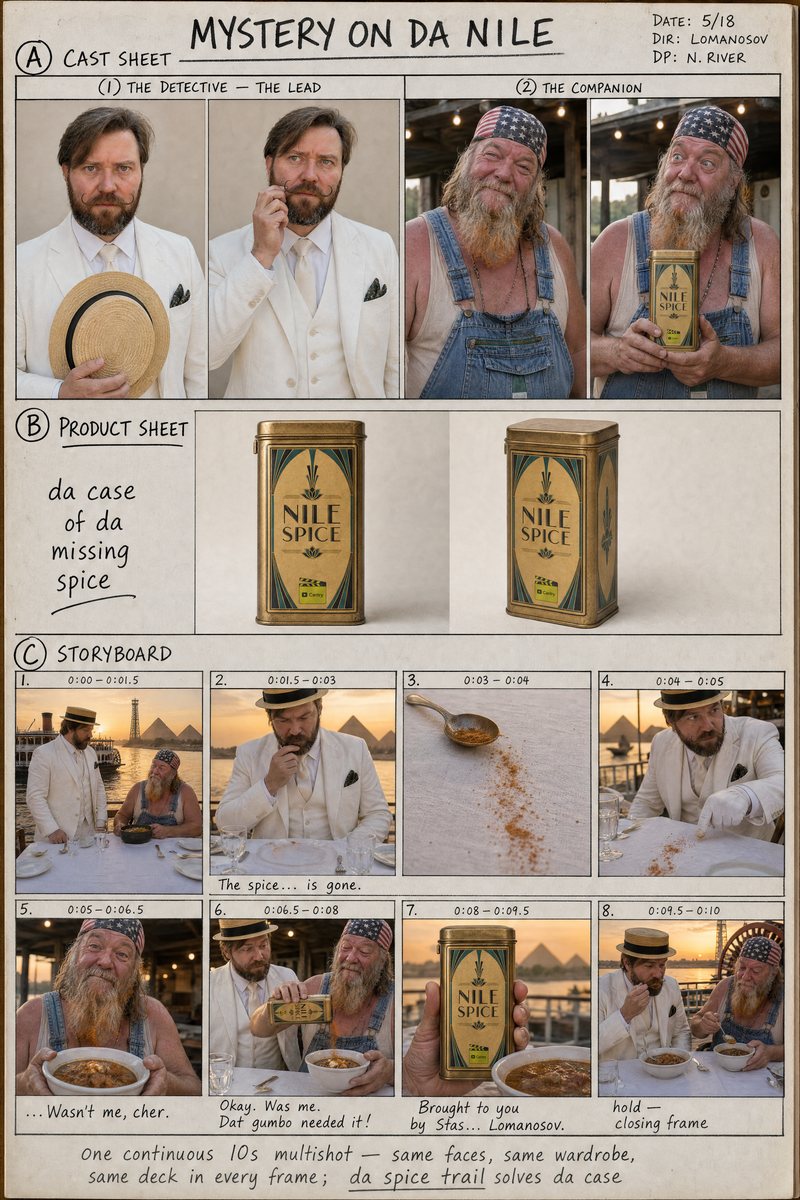
Character sheets
Character canon, three panelsSecond character of the episode
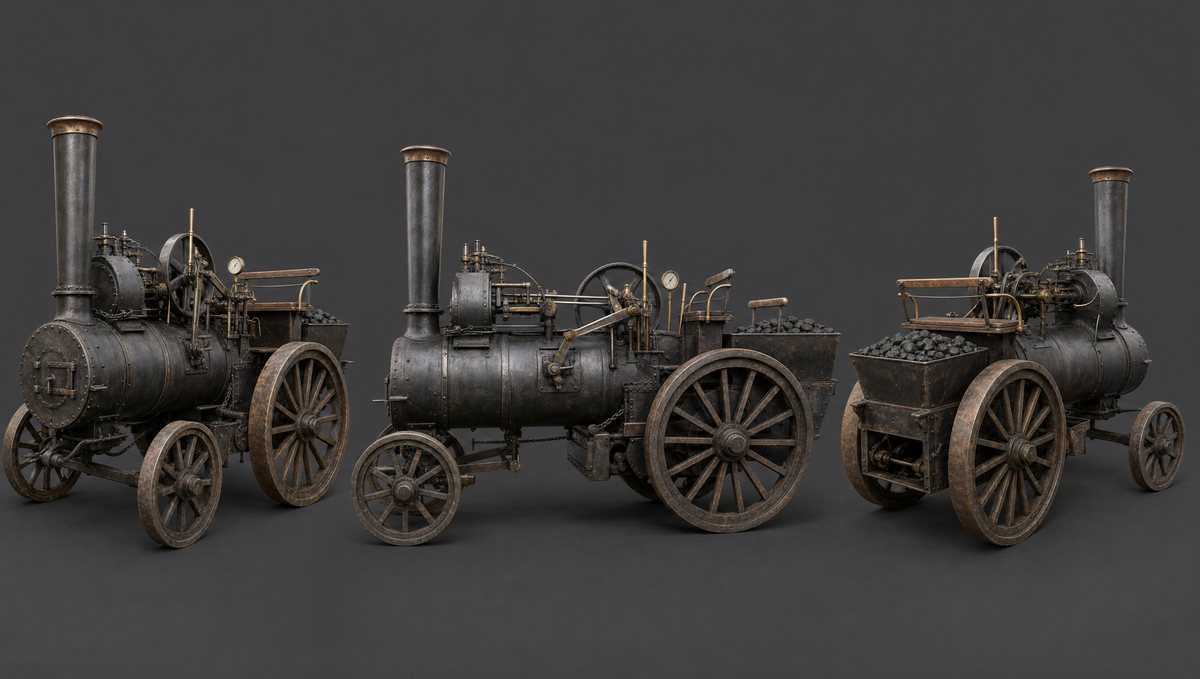
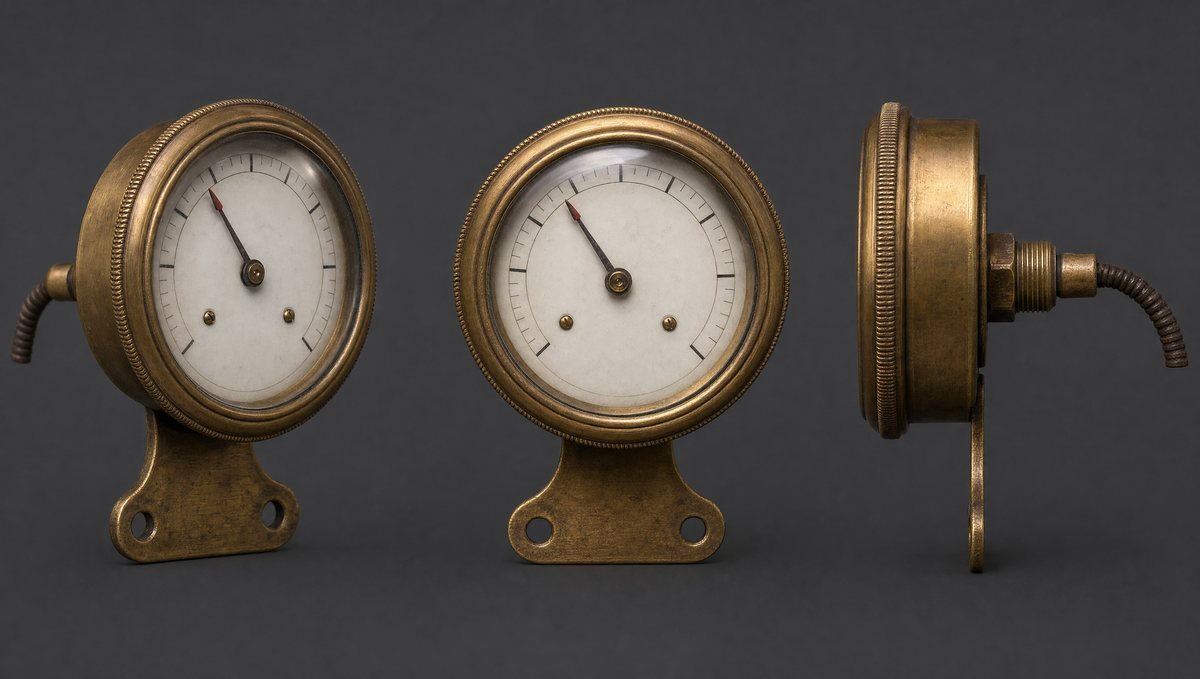
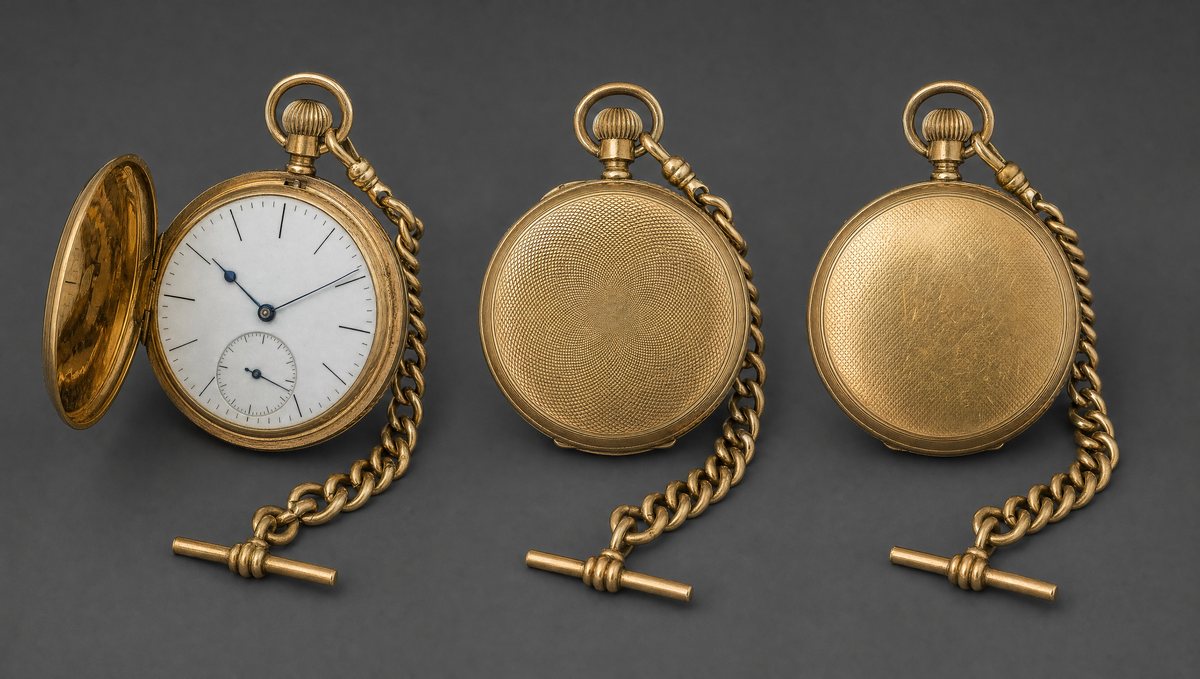
Props, each shot from three angles
Carriage, 1865Automobile, 1901Gauge, 1901Watch
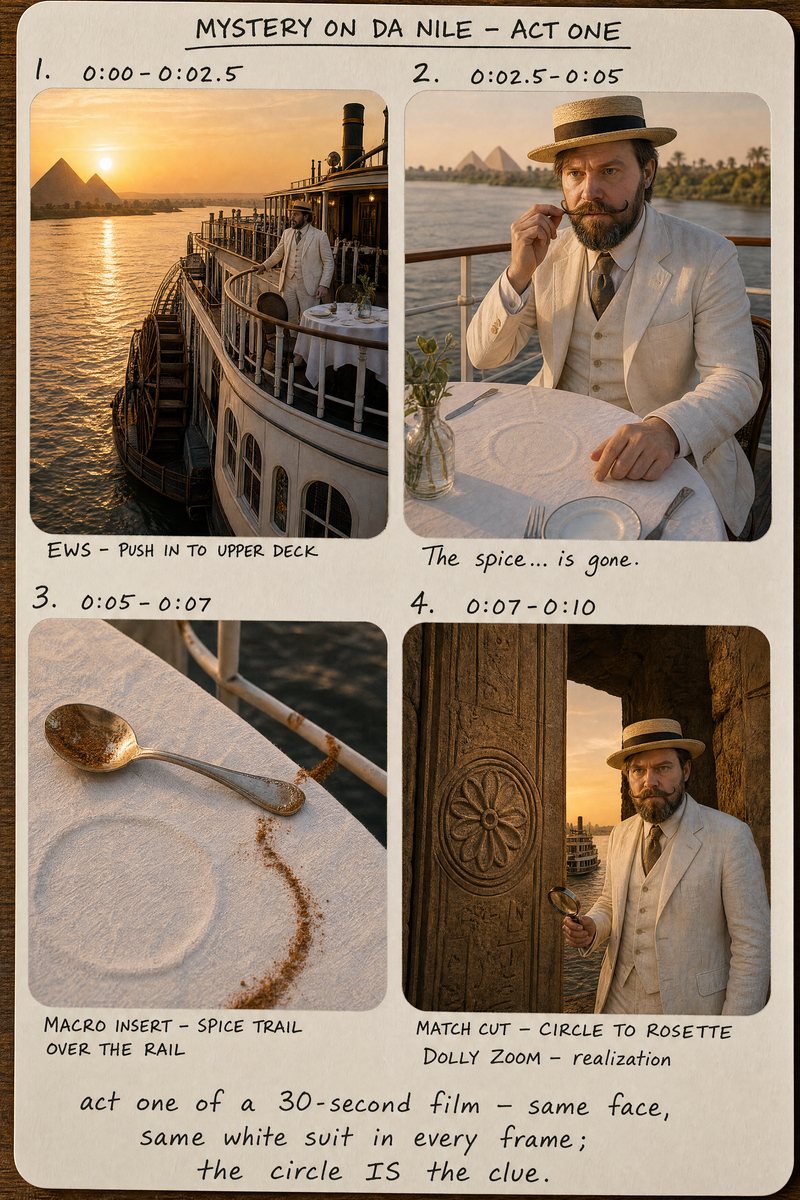
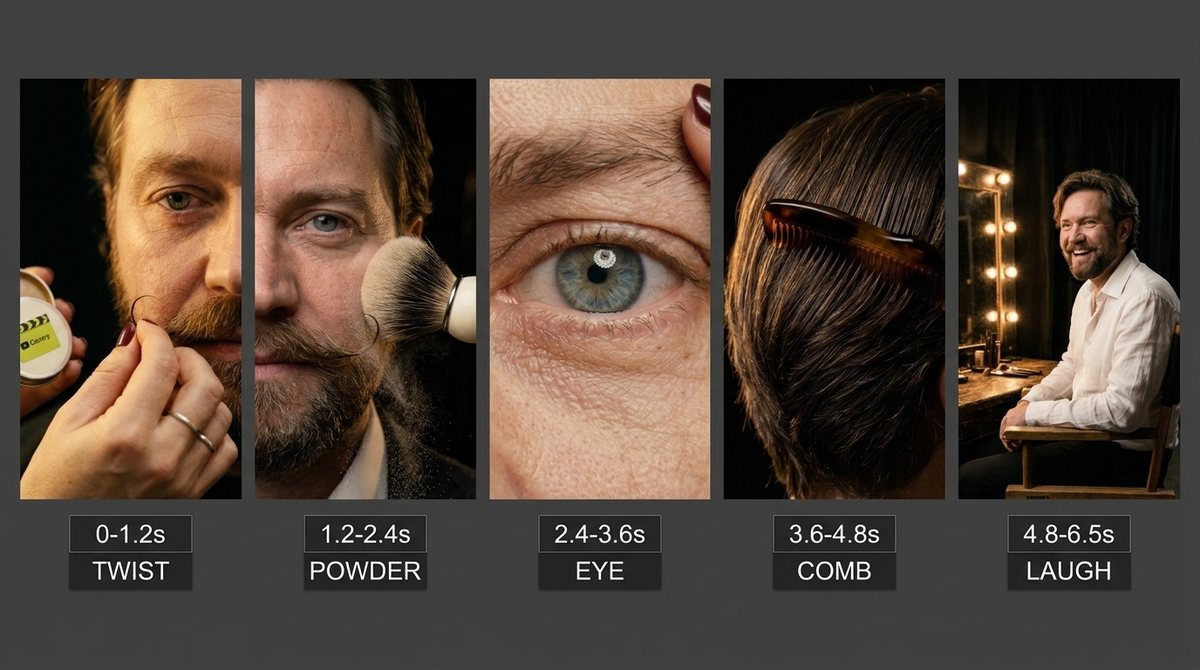
Storyboard and second-by-second timing
Scenes broken into shotsSecond part
Every shot carries a timecodeAction broken down to fractions of a second
A location is locked once and then lives across every shot of the episode. That is why the workshop in shot five and in shot twenty is the same room, not a similar one.
What is needed, and how I cover it
What is needed
Content that does not die within two days
What I have
Storytelling built on facts and history. My channel shows it: ten videos still bring in more than half of all traffic months after release.
What is needed
Volume without losing quality
What I have
My own production pipeline. Every unit passes review while the volume keeps growing. That is solved by a system, not by more hands.
What is needed
A recognisable style instead of a mixed bag
What I have
Recurring characters and one visual code. Characters get attached to the brand and build recognition, faces and objects do not drift between videos.
What is needed
Clear reporting instead of promises
What I have
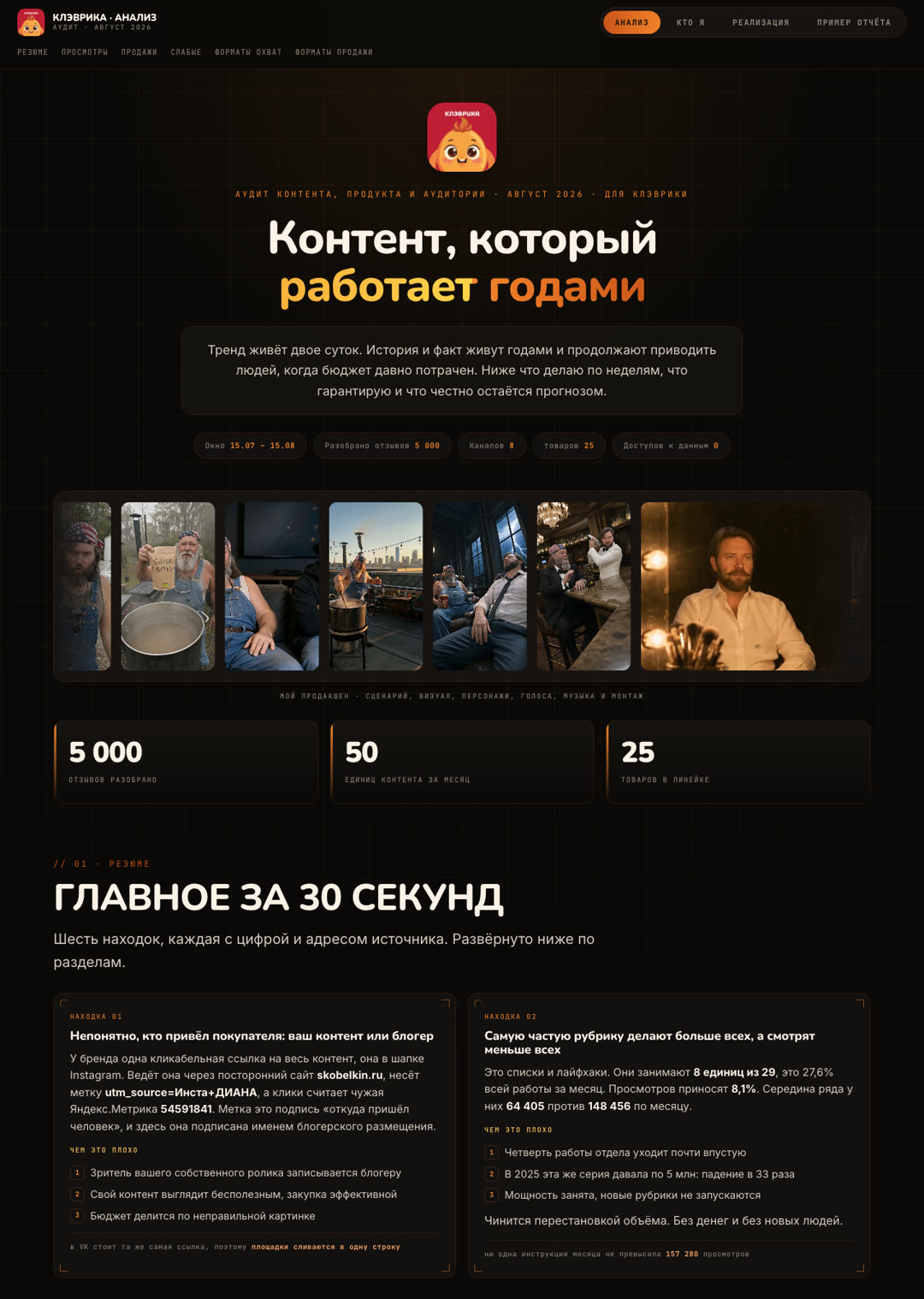
Weekly interactive reports: week-over-week dynamics, referral funnel, platform comparison, progress on every unit of content.
Stack
I work with every major generative model used in content production, and I write the automation that ties them together myself.
Text and reasoning
LLMs
Claude, GPT, Grok, Gemini
Video
Motion generation
Seedance 2 and 2.5, Veo 3, Kling 3, Gemini Omni Flash, Runway, Hailuo
Content factoryproduction at volume, own channel network+
Not a one-off video but a system: a pipeline that ships volume and holds quality.
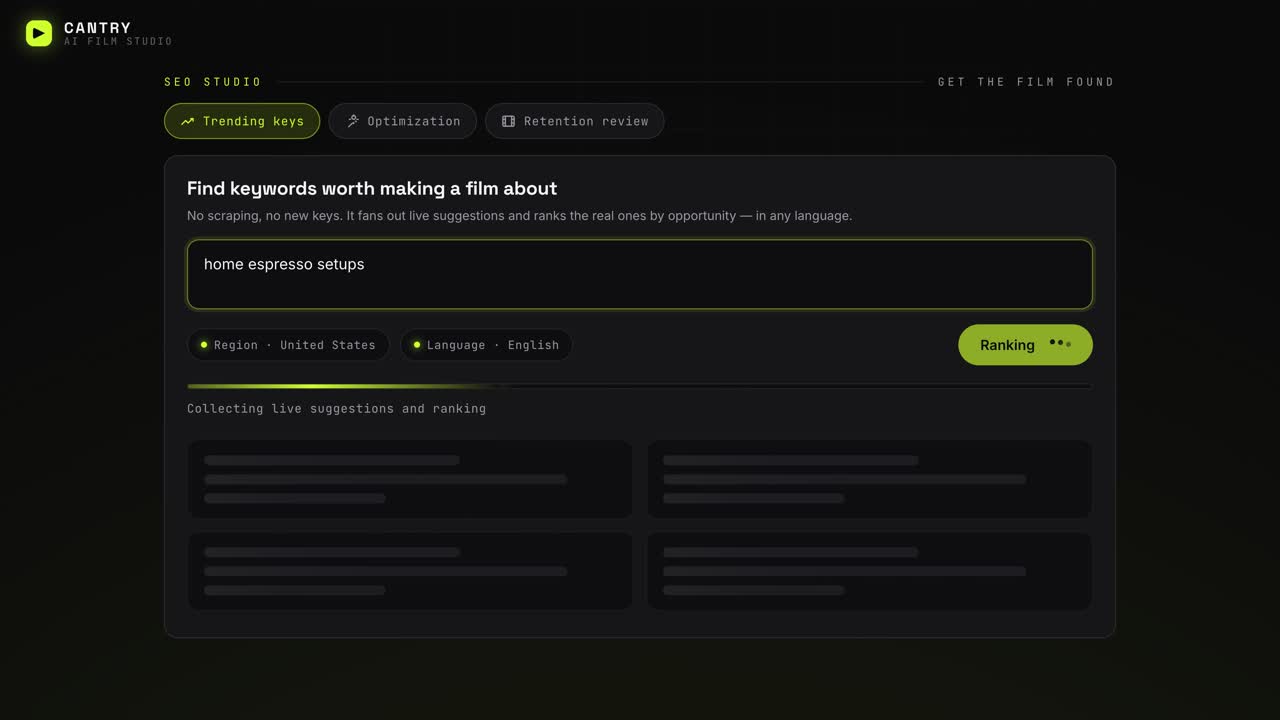
PromoCANTRYAI Film Studio▶
GEO and AI-search visibilitycan ChatGPT, Perplexity and AI Overviews find the brand+
Recruiters and buyers increasingly ask a model instead of a search engine. I check and tune what the model actually sees.
Live example
The GEO stack of this site
Methodology, implementation, verification
Static delivery, Person markup, answer-first FAQ, robots tuned for AI bots, sitemap, llms.txt, two language trees.
Readable by people and by models alike
Content slot
Material provided by Stas
Room for a client GEO case.
Content slot
Material provided by Stas
Room for a piece in this category.
03·My product+
04·Process+
// R1 · Horizon
From immersion to scale
The first two months are preparation: building the pipeline for the project, creating characters and tuning the delivery. Scale starts in month three, once the system is proven on live releases.
The curve shows the shape of the process, not numbers to sign under. It explains why month one looks modest: accumulated reach of evergreen content does not grow linearly. A video released in week one keeps adding views in month three.
// R2 · Breakdown
What happens month by month
For the first two months the channel deliberately does not scale. The system must be proven first, otherwise volume just multiplies the error.
01
02
03
04
Month 01
Immersion and first readings
I dig into the project, we lock the red lines, set priority topics and strategy. I build the characters and project elements and release the first videos to probe the audience with live numbers, not hypotheses.
Month 02
Calibration and brand link-up
I cut the formats that do not work and double down on what catches. Only here, with views and followers in hand, do I start linking the channels to the brand and carefully bring branded elements into the frame.
Month 03
System proven, scale begins
The pipeline works, the delivery is tuned, the formats are clear. Recurring characters and full brand identity come in. Volume scaling starts.
Months 04-06
Volume and recognition
Characters are attached to the brand and build recognition. The channel reaches planned volume, growing across platforms and deeper into geo coverage.
// R3 · First month
Month 01, week by week
The first month is tuning. Everything else builds on it, and an error here gets multiplied by volume in month three. There are no viral spikes in month one and I will not promise any.
Week 01
Immersion, red lines, strategy
Week one is reconnaissance, not production. I take the project apart: what we sell, to whom, what makes it different. At most three videos go out to probe reaction. We lock the list of what is strictly off-limits and define the lead and the strategy.
Output: 3 units · a scouting week, not a volume week
Week 02
Characters and locations
I build the heroes and the space of the project: different looks for different roles, different locations for different stories. From this point every video is assembled from a ready library. Channels are NOT linked to the brand yet: audience first.
Output: 7 units · a library of looks and locations
Week 03
Narrator voice and delivery
I cast and test the narrator voice on real scripts and keep the one that holds attention. I tune the delivery to hit the right age and gender: pace, music, wording, hero type. Then course corrections follow the numbers, not opinions.
Output: 7 units · voice and delivery locked
Week 04
Report and month two plan
I take the readings: who actually reacts, which formats and topics work, which platform responds best. You get a report with numbers and the plan for month two.
Output: 7 units · 24 in month one total
// R4 · Building content elements
How I build the world of a project
This is what separates a pipeline from one-off videos. The world is built before the first frame: characters, props and locations are created once and reused across every release. Without it, thirty videos are thirty unrelated generations where faces and settings drift.
Character canon
A reference sheet per character: the face from fixed angles, in identical light, on a neutral background. The starting point we never leave.
Result: the face does not drift between videos, the viewer recognises the hero a month later.
Costume versions
Variants build from the canon for roles and eras: narrator, expert, story character. The face stays, everything around it changes.
Result: one hero covers any scene without a reshoot.
Props
Objects that repeat from video to video. Each is built once and gets its code in the library.
Result: the object in video five and video twenty is the same object.
Locations
Places the story lives in: a street of the right era, a house, a workshop, an interior for the plot. A location is locked as firmly as a hero and reused across videos.
Result: the channel gets a recognisable world, not a random backdrop.
Narrator voice
I cast and test the narrator: timbre, pace, manner. Several options run on real scripts, the one that holds attention stays and never changes from video to video.
Result: one recognisable voice, and the voiceover depends on nobody's schedule.
Delivery tuned to age and gender
I tune the delivery itself: editing pace, phrase length, music, wording, hero type, humour. The same topic delivered differently gathers a completely different audience.
Result: the channel grows the audience that actually buys, not an abstract one.
Assembly and release
The script is written in shots: one sentence is one shot. Then the library, the voiceover, music, edit and scheduled publishing across four platforms.
Result: a predictable pace of 7 units a week with no quality drop.
Heroes
Content slot
Content provided by Stas.
Props
Content slot
Content provided by Stas.
Locations
Content slot
Content provided by Stas.
// R8 · Rules
The rules that make it work
01
No piece-by-piece approvals
Red lines are set once at the start; that is what they are for. I work inside them without per-video sign-offs. Piecemeal acceptance kills the pace and confuses the algorithm.
02
Release on schedule
Publishing does not depend on my calendar: weekend material is ready in advance and goes out automatically.
03
A report every week
Not "all good" but numbers: what shipped, what worked, what gets cut, what happens next week.
04
Access to analytics
I need at least read access to the analytics. Without retention and saves I am working blind.
05
Geo targeting
Impressions go to the regions with the densest target audience: that is where the ramp-up and the recognition are.
06
Expansion on evidence
A second account, extra characters and volume growth are discussed separately, after the first loop is working.
05·Reporting+
Reporting examples
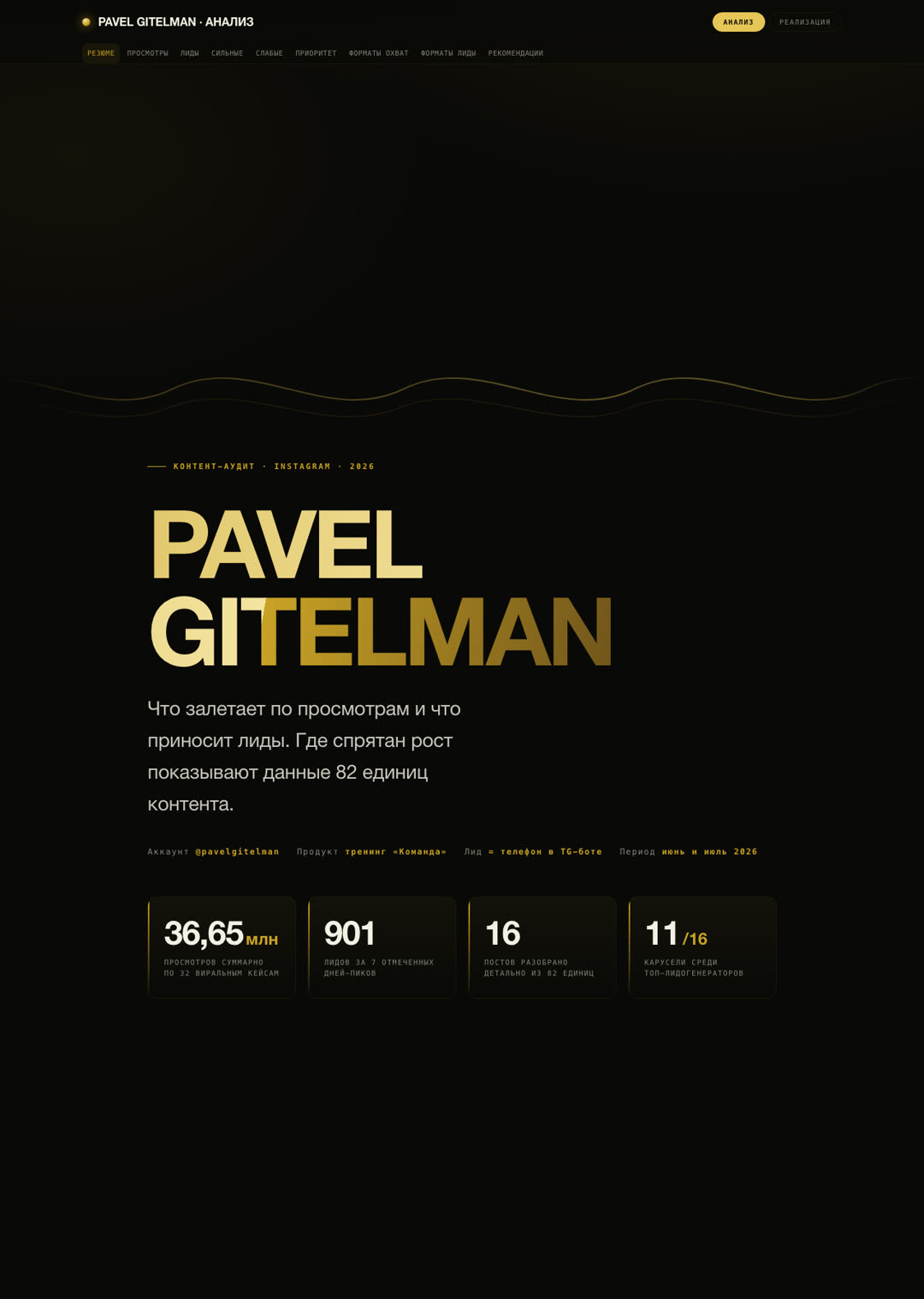
Not a letter saying "all good" but a working document with numbers. Below is the real report mock-up. The data is fictional, the mechanics are real.
Demo
The numbers below are fictional, placed only to show the format. Real figures land here after the first working week.
Growth report
Channel network · four platforms
Reporting week#07
0Views this week▲ +34% vs wk 06
0Completions≈48% of reach
0New followers▲ +118 vs wk 06
0Saves and shareskey signal of the week
Highlight
A format found its audience
The flagship video broke out of the subscriber base: 78 percent of views came from non-subscribers. The topic becomes a series.
What gets cut
Anything over 70 seconds
Three videos over 70 seconds returned a median of 410 against 1,830 for short ones. From next week we hold 45-60 seconds, no exceptions.
Takeaway of the week. The channel moved from "shown to our own" to "shown to strangers". Next task: hold the non-subscriber share above 70 percent.
The same material behaves differently per platform. Below is each contribution this week.
YouTube
58 200
TikTok
40 600
Instagram
20 100
Facebook
9 500
YouTube
The core and the long tail
Brings 45 percent of the week. Videos keep gaining months later; the asset builds here.
TikTok
Ramp-up speed
Picks up a new topic fastest. Hypotheses are tested here, then carried across.
Facebook
The buying age group
Smallest in volume but the oldest audience, the one that makes the purchase decision.
Click the legend to hide or return a platform. Hover a point to see the whole week.
Growth over 7 weeks
×14
From 9,100 in week one to 128,400 in week seven.
Record of the period
128 400
Week 07, the maximum so far.
Accumulated reach
412 700
The sum of seven weeks. Older videos keep adding.
From impression to enquiry, honestly step by step. Every number is what analytics actually shows.
0 Views this week
0 Completions
0 Saves and shares
0 Profile visits
0 Link clicks
0 Messages and calls, the edge of my zone
Honestly about numbers. An enquiry arrives by phone or via the site; platforms cannot tie it to one video. So the bottom step is proof of direction, not the channel KPI.
Doubling down
What proved itself
The working series. We hold 45-60 seconds and add a second weekly release on this line.
Changing
What did not work
Long formats and generic topics. Out of production; capacity moves to the working line.
Horizon
Focus
Expectation
Next week
The working series, 8 units
Hold non-subscriber share above 70 percent
A month ahead
Branded elements enter the frame
First stable breakouts
The quarter
Volume scale on a proven pipeline
Regular six-figure weekly views
06·Contact+
Let's build your content factory
Open to employment and to client projects. Remote, working with teams in the US, UK and Europe.


 ✓Higgsfield Academy · AI Filmmaking